
October is National Bullying Prevention Month! 🧡
Elementary school is a crucial time for growth—not just academically, but socially and emotionally. Every day, our students are learning how to share, resolve conflicts, navigate peer relationships, and communicate their feelings. Just like learning to read or do math, learning how to interact kindly and respectfully with others is a skill that takes time, practice, and guidance. As children test boundaries and practice these skills, they occasionally experience peer friction. To help us support them effectively, it helps to use shared language when talking about peer conflict.
At our school, we actively teach, model, and reinforce these positive social interactions. Every classroom has a dedicated Morning Meeting, where our classes engage in targeted Social-Emotional Learning (SEL) and classroom climate building. During this time together, students practice how to treat one another with respect, navigate conflict productively, and build a culture of everyday kindness.
Understanding Social Interactions: Rude vs. Mean vs. Bullying
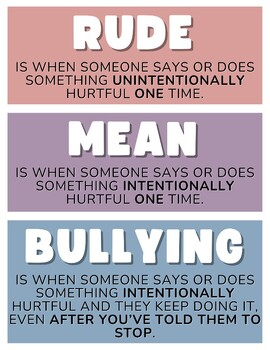
Children don't always have the vocabulary to describe negative peer experiences, which can lead to using the word "bullying" for every unkind moment. Here is how we break it down for students:
Rude (Inadvertent/Unthoughtful): Saying or doing something hurtful without intending to cause harm. It often stems from poor manners, distraction, or a lack of social awareness (e.g., cutting in line, burping without saying excuse me, or accidentally stepping on someone's shoe).
Mean (Intentional, but One-Time/Occasional): Saying or doing something intentionally hurtful to make someone feel bad, but it happens once or twice during a moment of frustration or anger (e.g., saying "you can't play with us today" during a heated game, or calling a classmate a name in anger).
Bullying (Repeated, Intentional, & Imbalance of Power): Targeted, aggressive behavior that is repeated over time and involves a real or perceived power imbalance (e.g., a student repeatedly mocking someone every day, excluding them systematically, or using physical intimidation).
Our Stance & Handling Bullying
Bullying is never tolerated at our school, and we are committed to providing a safe, inclusive environment for every student. However, we do not always know when bullying is occurring, especially when it takes place quietly, off school grounds, or through digital devices at home. When incidents of bullying or persistent mean behavior are brought to our attention, our staff takes immediate action through direct intervention, clear logical consequences, restorative conversations, and close collaboration with families.
Because many negative interactions happen outside of school hours, we strongly encourage parents to monitor who their child spends time with, provide safe supervision, and be vigilant with smartphones, personal devices, and digital access. We have seen firsthand the severe negative consequences that early access to cell phones and social media can have on young children's mental health, self-esteem, and peer relationships.
If your child has access to a device, we ask that you actively monitor their messages, apps, and online interactions. Furthermore, we strongly encourage parents to consider delaying giving their child a smartphone or personal device, whether by joining the "Wait Until 8th Grade" pledge or even waiting until age 16. Protecting our children’s social-emotional health is a team effort both inside and outside the classroom.
To keep these important conversations engaging and meaningful, we have the following planned:
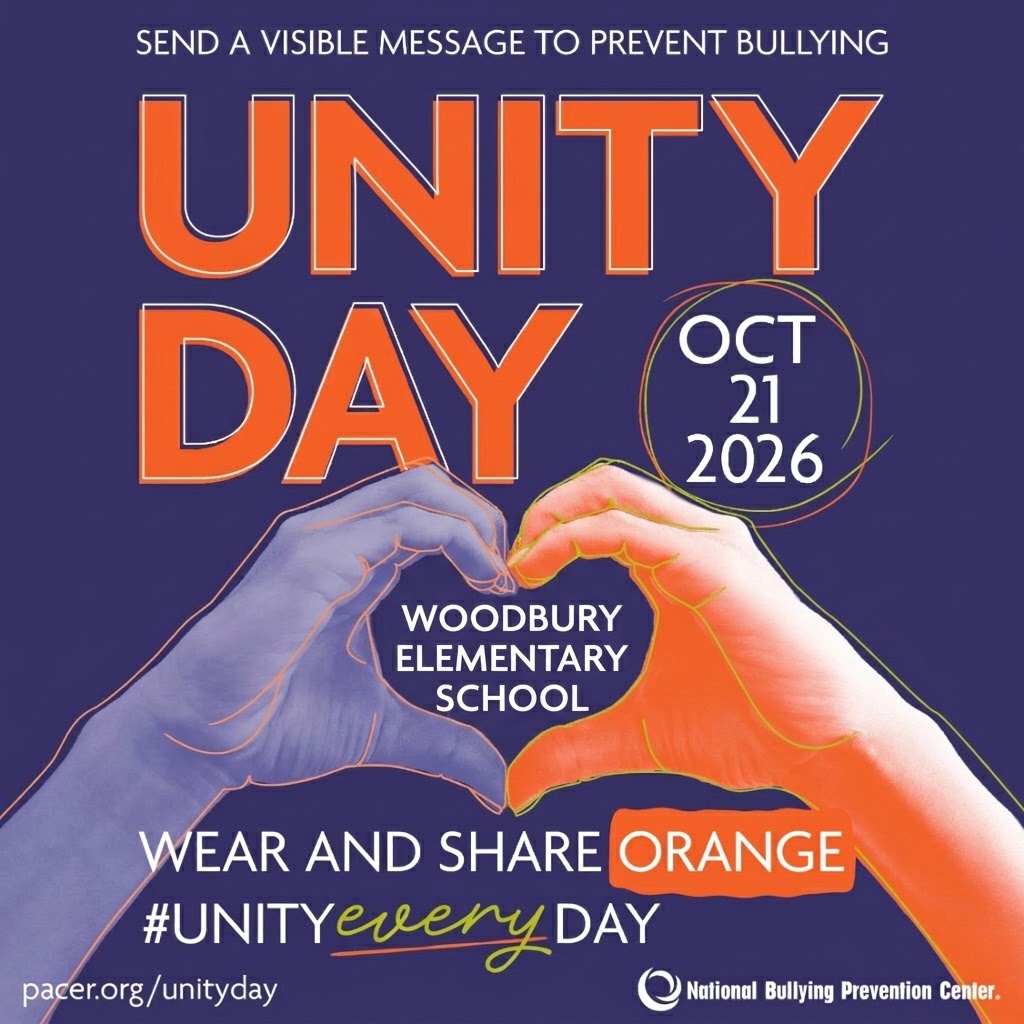
Unity Day (Wednesday, October 21st - Wear Orange!): We invite all students and staff to wear orange on October 21st to send a visible, unified message of support, kindness, inclusion, and community across our school.
The Purple Hand Pledge: Students will take the Purple Hand Pledge as they have done for the past several years, promising "I will not use my hands or my words for hurting myself or others." Each student will trace or create a purple handprint to display in our hallways as a daily reminder of our shared commitment to peace and respect.
How You Can Help at Home
Children naturally internalize how to treat others based on what they experience, observe, and absorb in their environment. Here is how you can reinforce these lessons at home:
Model Conflict Resolution: Children pay close attention to how adults respond to stress, handle disagreements, and talk about others (including drivers on the road or family members). Demonstrating calm communication and empathy shows them how to manage tough moments.
Monitor Media and Device Interactions: Keep conversations open about what they watch and hear online. Keep phones out of bedrooms at night and regularly check group chats and messaging platforms for kindness and appropriateness.
Role-Play and Problem-Solve: When your child shares a tough moment from school, help them name it. Ask, "Was that a rude moment, a mean moment, or something that keeps happening?" Practice what to say next time (e.g., using strong "I" statements like "I don't like that, please stop").
Promote Empathy & Open Communication: Encourage your child to report hurtful behavior to a trusted adult right away—whether at home or at school—so we can intervene promptly.
Thank you for partnering with us to build a supportive, compassionate school environment where every student feels safe and valued!